In 1865, the NJ state legislature authorized The Passaic Valley and Peapack Railroad Company to build a railroad from Essex or Union counties westward along the Passaic River to Basking Ridge and on to Peapack. A later amendment authorized an extension to the Delaware River between Milford and Frenchtown. John H. Anderson (1813-1875) of Bernards
... Learn moreTag: Railroads
1894 NJ Train Wreck
The Delaware, Lackawanna & Western train wreck of 1894 is largely forgotten today, but claimed at least 14 lives, 4 of which were from the Somerset Hills. The wreck occurred Jan. 15, 1894 at 8:20 am in the Hackensack meadows just west of the tunnels that go under Jersey City toward Hoboken, NJ. Three cars
... Learn moreErie-Lackawana Trains
Two Erie-Lackawanna trains wait to be put in service in the Gladstone, NJ, rail yard in this undated color photo (left). These 3,000-volt direct current (DC) cars became a fixture on the line which was electrified in 1930. They were replaced with 25,000-volt alternating current (AC) cars in 1984. Below, trains near road crossing.
... Learn moreUnion Grove, NJ
If you blink, you will miss it. Union Grove is a tiny enclave off Pottersville Road between Pottersville and Peapack-Gladstone. Farms and residences line Union Grove Road, which forms one side of a triangle with Pottersville Road and Lisk Hill Road. To the north, the defunct Rockaway Valley Railroad line once connected the region and
... Learn moreNext Stop Basking Ridge: A Short History of the Basking Ridge Train Station
Rail service came to Basking Ridge in 1872 when the New Jersey West Line railroad (now NJ Transit) was extended from Summit, NJ. Back then, the line ended at Bernardsville and Basking Ridge was the next to last stop. The arrival of trains soon triggered a development boom on the northern side of the village.
... Learn moreRockaway Valley Railroad Bridge Spike
THSSH recently acquired a bridge spike that was part of the Rockaway Valley Railroad. The spike was donated by Peapack and Gladstone and was found in the borough. It measures 10.25” in length and was used to fasten wooden ties to the wood structure of railroad bridges. Bridge spikes are typically longer than the spikes
... Learn moreMillington Trestle
An early picture postcard of the railroad trestle between Millington and Lyons addressed to Mrs. John Boyle in Liberty Corner. The card has an undivided back which indicates it was printed before 1907, when the post office allowed a divider to separate a message from the address. Mrs. John Boyle was Sarah Faulkner Boyle (1844-1933),
... Learn moreRockaway Valley Railroad
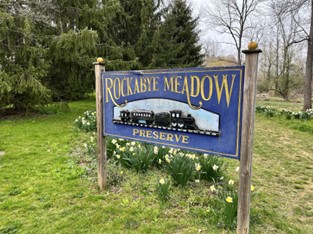
Construction of the Rockaway Valley Railroad, which crossed the Somerset Hills, concluded in 1892, and the route remained in service until 1914. Predominantly used to transport peaches, the railroad struggled financially from its inception due to the unreliability of peaches and the lack of major city connections. A peach blight actually occurred soon after the
... Learn morePeapack Postcard
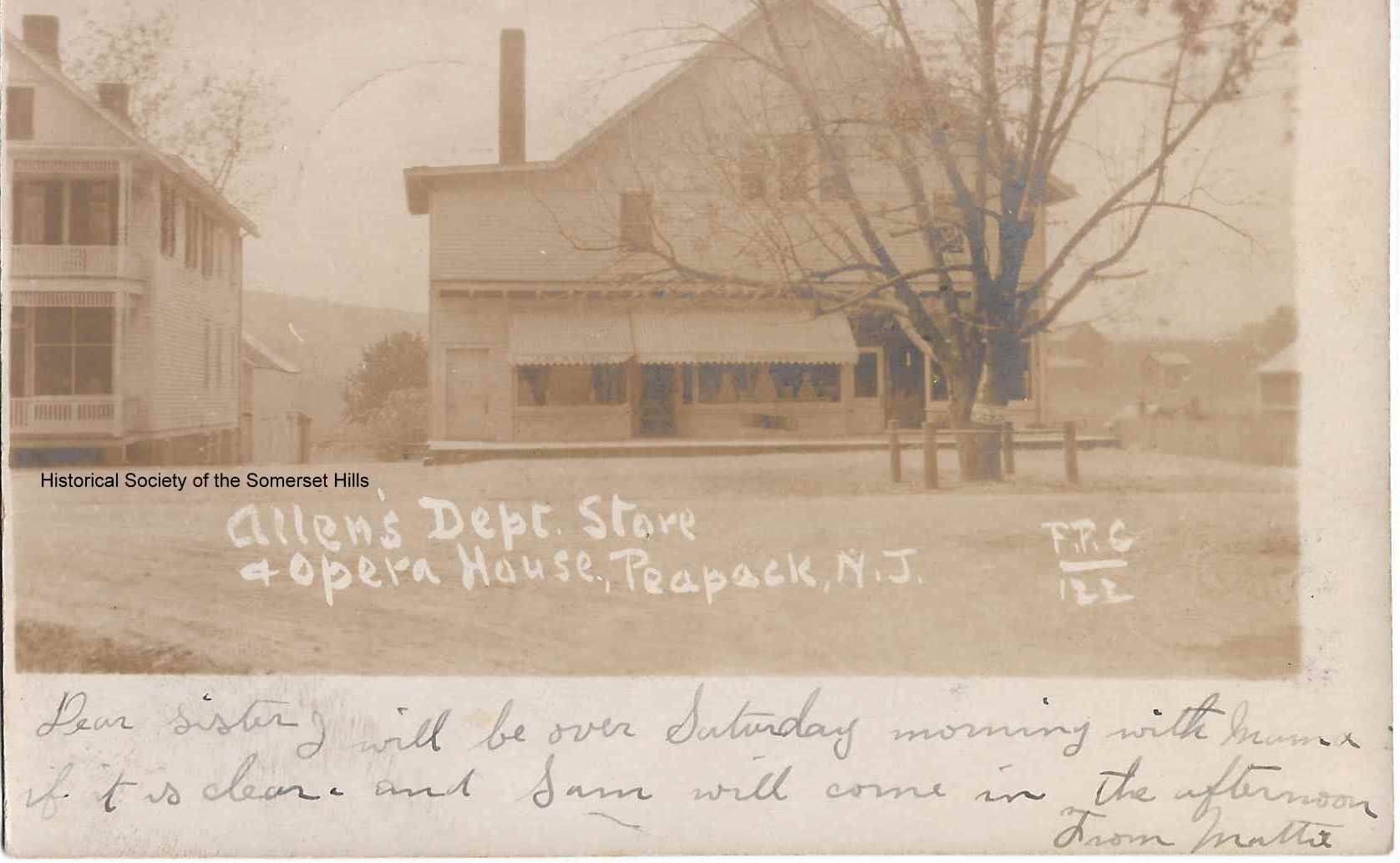
This old postcard from the Society’s archives tells a great story–more like three stories. Back in 1906, someone named Mattie (probably Martha E. Boyle Fenner of Peapack) decided to write to her sister Mrs. Philip Koechlein (Floretta Boyle Koechlein, 1877-1966) in Liberty Corner where the Koechlein family later operated a store. Click on the photo
... Learn moreSomerset Hills Peaches, 1886
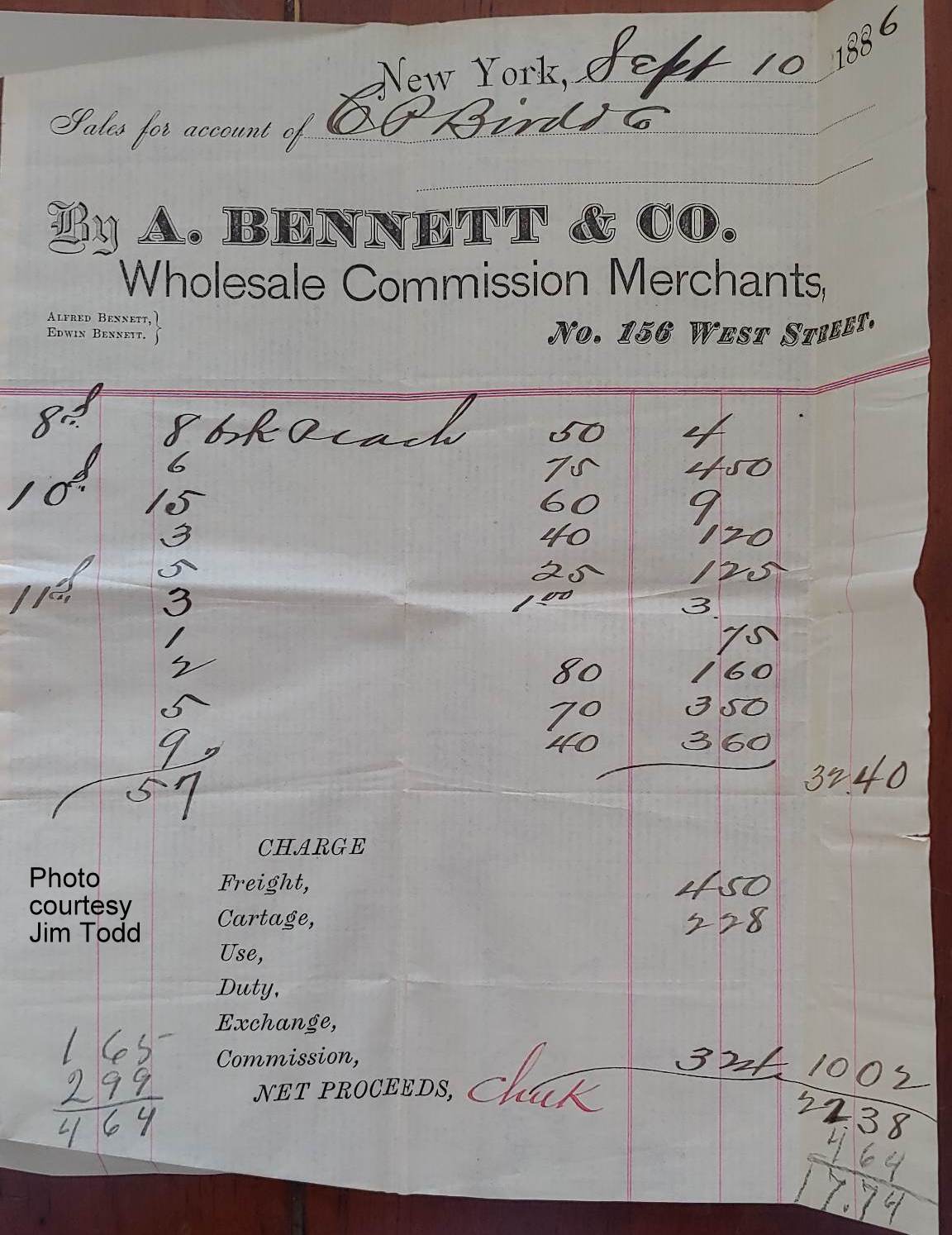
Peaches became a major cash crop in the Somerset Hills during the late 19th century. Farmers gained new markets with the arrival of the New Jersey West Line Railroad in Bernardsville (1872) and the Rockaway Valley Railroad in Pottersville and Gladstone (1889-90). Railroads were used to ship peaches and other commodities to cities all along
... Learn more