Ann Baumgartner Carl, Jet Pilot

Ann Baumgartner, who lived on Mt. Harmony Road in Bernardsville, NJ, during her teens and 20s, became a Woman Airforce Service Pilot (WASP) in World War II and the first woman in America to fly a jet airplane.
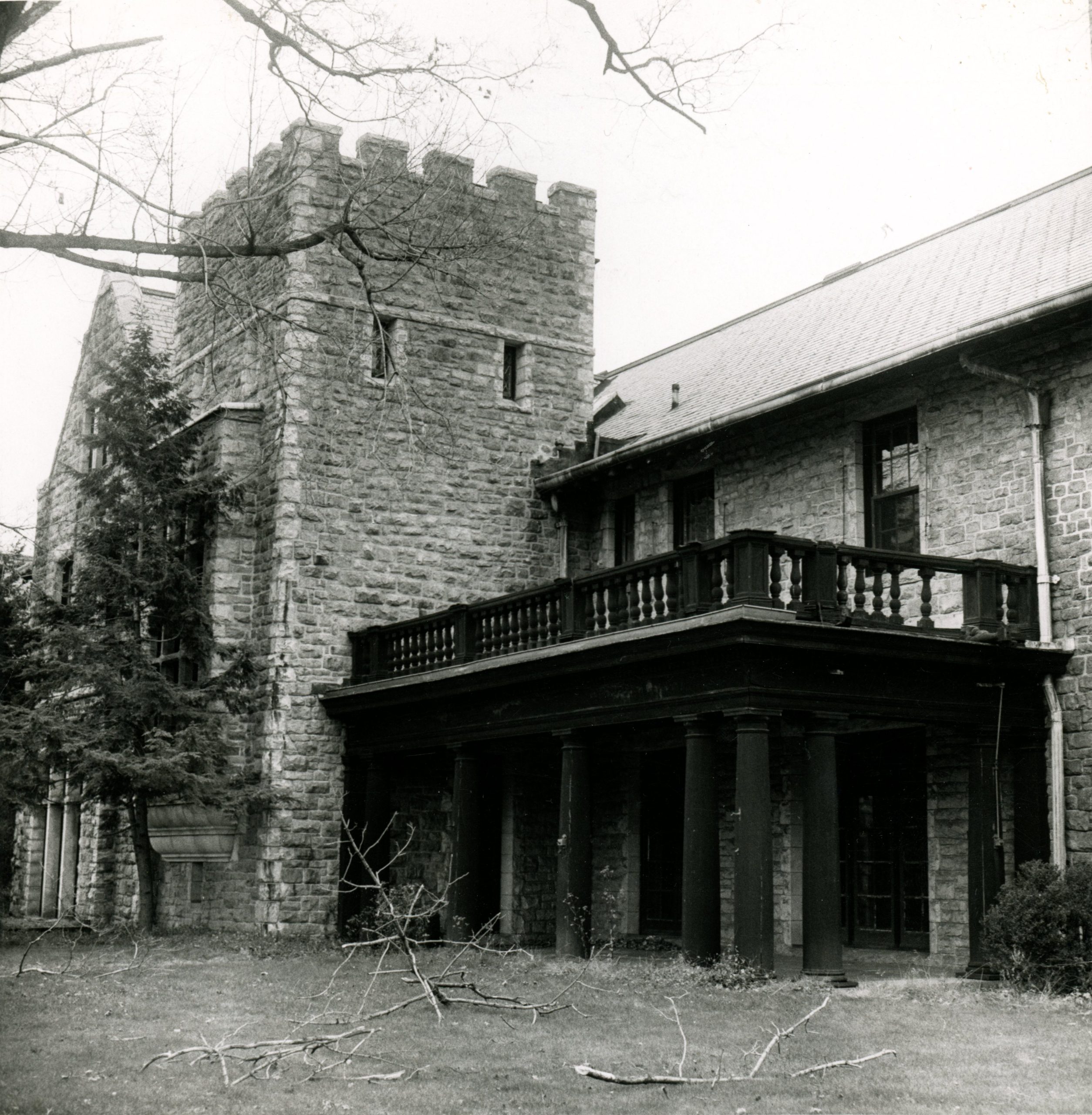
Born in 1918, Ann learned to fly in 1941 in a yellow Piper cub airplane at Somerset Hills Airport in Basking Ridge from Lew Penn, an instructor there who later became a pilot for Pan Am. [1] Along with Jasper Wright, another aspiring pilot, she shared the purchase of a “tired old cub airplane (underpowered, no brakes, with tears in the fabric wings)” and “flew, flew, flew” to earn the 200 hours needed for a commercial flying license. [2] Ann introduced local boy and girl scouts to flying and flew rescue missions for the Civil Air Patrol until the summer of 1942 when all private flying on the Eastern seaboard was prohibited because submarines had been spotted offshore. Ann also assisted her father with Civil Air Defense from the 4th floor tower of Upton Pyne mansion in Bernardsville, keeping a lookout for enemy aircraft.
In January 1943, Ann was accepted into the 43-3 class of the WASPs and began training in Houston, TX, later becoming the only WASP permanently assigned to Wright Airfield, OH, where she conducted test flights in fighters and bombers. She became the only WASP to test fly the U.S.’s first jet fighter–a YP-59A – on October 14, 1944, and was recognized for this accomplishment by Army Air Force General Hap Arnold when he spoke to the last graduating class of the WASPs on Dec. 7, 1944:
“Well, now in 1944, more than two years since WASP first started flying with the Air Forces, we can come to only one conclusion–the entire operation has been a success. Certainly, we haven’t been able to build an airplane you can’t handle. One WASP has even test-flown our new jet plane….”

Four days after D-Day, Ann married Bill Carl, an aeronautical engineer, and they had two children. She became an aviation instructor on Long Island, a journalist specializing in science and the environment, and (along with her husband) a long-distance sailor. In 1999, Ann was honored by the Wright Brothers First Flight Society, in 2001 she was inducted into Women in Aviation International’s Pioneer Hall of Fame, and in 2004, she was given the National Aviation Association’s Stinson Award for Achievement. She died in 2008.
Though 38 out of the 1,102 WASPs died in the service of their country, they were not acknowledged and did not get military recognition until 1977. In 2010, the WASPs were honored with the Congressional Gold Medal — Congress’s highest civilian honor.
Photo credits:—Ann Baumgartner. Courtesy WASP Archive, Texas Woman’s University, Denton, TX.
—Upton Pyne tower. Photo by Edwin S. Spinning, courtesy of the Bernardsville Library Local History Room.
About the author: Carol Simon Levin is an author and historical storyteller, specializing in “fascinating women history forgot.” She tells Ann’s story in a live performance A WASP Takes Wing – details and a list of upcoming performances can be found on her website: www.tellingherstories.com.
[1] Ann Baumgarten Carl, A WASP Among Eagles. Washington, DC: Smithsonian Institution Press, 1999, p. 24.
[2] Ibid, p. 35.